
Key takeaways
- VAT on a company car is deductible up to 50% at most (article 45, § 2 of the VAT Code).
- This ceiling is absolute: professional use above 50% changes nothing, half remains the maximum.
- Below the ceiling, the deduction tracks actual professional use, established by one of FPS Finance's three methods.
- The 35% flat rate needs no log but commits you for at least four years, per vehicle and per user.
VAT on a company car: a 50% ceiling
VAT on a company car is not recovered like the VAT on an ordinary business purchase. It follows a regime of its own, that of article 45, § 2 of the VAT Code: the tax on the purchase, rental, lease, maintenance, fuel and accessories of a passenger vehicle is deductible up to 50% at most in Belgium. That figure applies to a company and to a VAT-registered self-employed person alike.
This 50% ceiling is absolute. Even if you drive 90% of the time for professional reasons, the deduction stops at half the VAT paid: above 50%, use is presumed private, with no counter-evidence admitted. That is the particularity of the car, which the legislator treats as a structurally mixed-use asset.
Below the ceiling, actual professional use
The 50% ceiling is a maximum, not an automatic flat rate. Below it, the deduction tracks the vehicle's actual professional use. If that use is below 50%, the lower percentage applies: a car used 30% for the business gives a right to 30% deduction, not 50%.
The whole task, then, is to determine that professional-use percentage in a way that holds up under an audit. FPS Finance allows three methods for this, and you choose the one that best reflects your situation. The reference rule is circular AGFisc no. 36/2015 (no. E.T.119.650).
absolute ceiling
maximum deduction for a passenger car
methods allowed
to establish actual professional use
general flat rate
the no-log option, committing for 4 years
The three methods for establishing professional use
The first two methods measure professional use, each in its own way; the third fixes it at a flat rate. You can combine methods 1 and 2 from one vehicle to another. Method 3, by contrast, is an all-fleet choice: once adopted, it applies to all your mixed-use vehicles, in place of the other two.
| Trip log (method 1) | Semi-flat rate (method 2) | 35% flat rate (method 3) | |
|---|---|---|---|
| Record to keep | Full trip log | Known distances (no log) | None |
| Professional use | Actual, trip by trip | Computed by a formula | Fixed at 35% |
| 50% ceiling applied afterwards | |||
| Commitment period | One calendar year | One calendar year | 4 calendar years minimum |
Method 1 rests on a full trip log, kept vehicle by vehicle: for each professional trip you record the date, the destination and the mileage. Set against the total mileage for the year, this gives the actual professional-use percentage. It is the most exact method, but also the most demanding.
Method 2 avoids the daily log in favour of a semi-flat-rate calculation, reserved for a vehicle with a fixed user. The private-use percentage comes from a formula, and professional use is the remainder to 100%.
Method 3 sets professional use at a general flat rate of 35%, with no record to keep. In exchange for that simplicity, it commits you: you apply it per vehicle for at least four consecutive calendar years, and it only covers one vehicle per user. If one driver has a second mixed-use car, its professional use must be established another way, with a trip log.
The right VAT deduction on every car invoice
YouInv records your supplier invoices, applies the chosen deduction rate and prepares your VAT return in Belgium.
The vehicles outside the 50% ceiling
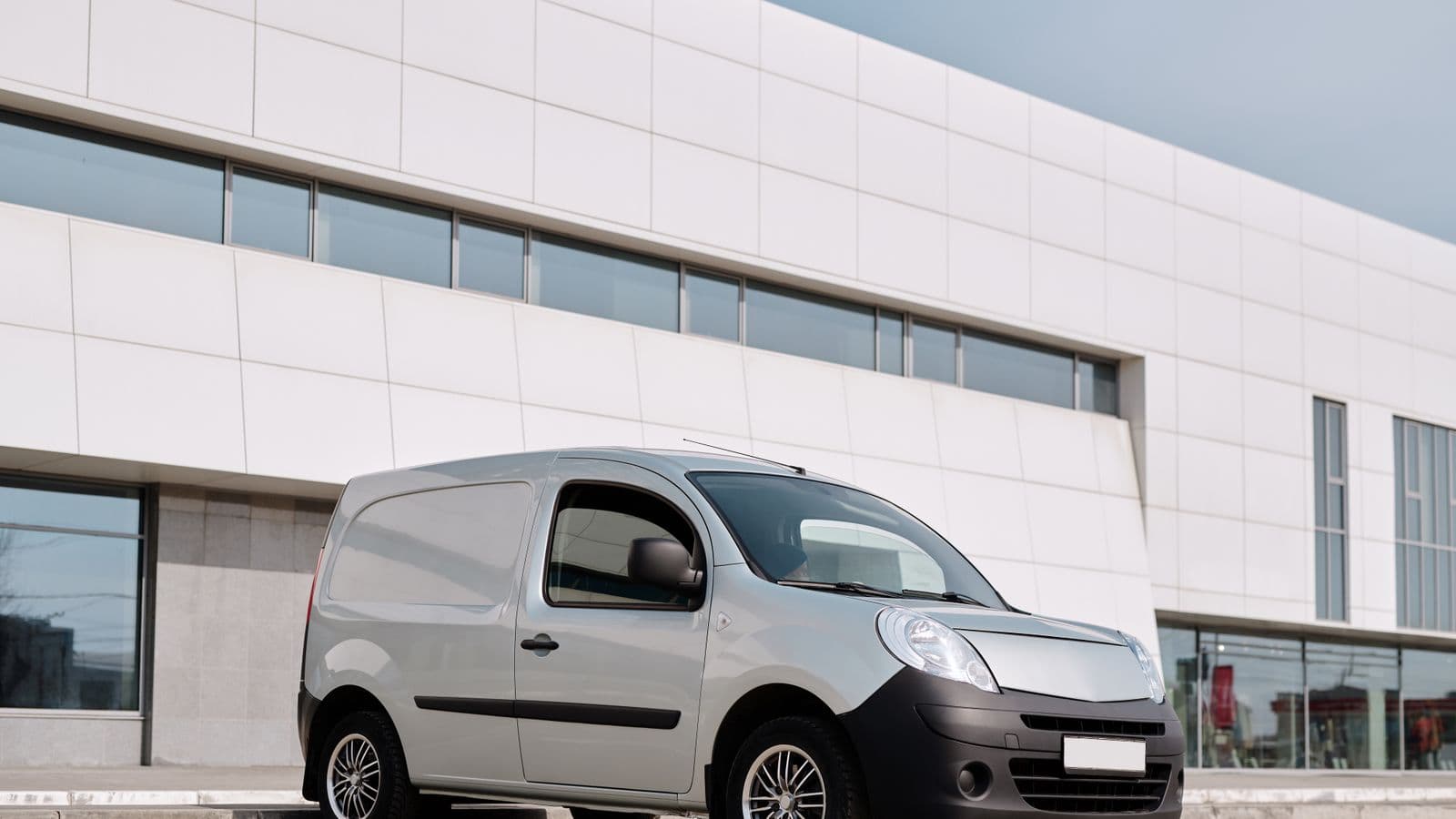
The 50% ceiling applies to cars meant for transporting people. Some vehicles fall outside it. A van (a light commercial vehicle) is not subject to this ceiling: its VAT is deducted according to actual professional use, under a flat-rate regime separate from that of cars. Likewise, the limitation does not apply to vehicles meant for sale or rental by a taxable person whose business that is (a dealer, a rental company), nor to those used exclusively for the paid transport of people, such as a taxi.
For these cases, the ordinary right of deduction applies, up to professional use, rather than the half ceiling. The distinction between a car and a van for VAT purposes rests on precise technical criteria: when in doubt about a vehicle's category, check it before applying a deduction rate.
Recording the deduction correctly in your accounts
The chosen percentage does not live in a separate spreadsheet: it plays out when each car-related purchase invoice is recorded. Fuel, maintenance, lease, accessories: each item gets the chosen deduction rate, and it is at data entry, not at the return stage, that the split must be correct. A right allocation from the start avoids a later adjustment, often discovered during an audit.
An accounting tool that applies the right rate by default to your car invoices spares you most of that risk. For the general framework of limited-deduction expenses, see also Non-deductible VAT in Belgium.
Further reading
- Non-deductible VAT in Belgium: the expenses excluded or limited by article 45.
- VAT rates in Belgium: the standard rate and the reduced rates.
- The periodic VAT return in Belgium: deadlines and how it works.
The reference source is authoritative: FPS Finance for the VAT deduction rules and circular no. E.T.119.650.
How much VAT on a company car is deductible in Belgium?
VAT on a company car is deductible up to 50% at most (article 45, § 2 of the VAT Code). This ceiling is absolute: even professional use above 50% gives a right to only half. If actual professional use is below 50%, that lower percentage applies instead.
What are the three methods for determining professional use?
FPS Finance allows three methods: method 1 (a full trip log kept per vehicle), method 2 (a semi-flat-rate calculation based on the home-to-workplace distance) and method 3 (a general flat rate of 35% professional use). The result of methods 1 and 2 is still capped at 50%.
How does the 35% flat rate work?
The general flat rate sets professional use at 35%, with no record to keep. It applies per vehicle for at least four consecutive calendar years and only covers one vehicle per user; a second car used by the same person must then be justified with a trip log.
Are VAT deduction and income-tax deductibility the same thing?
No. The 50% VAT ceiling (article 45, § 2) and the income-tax deductibility of car expenses are two separate regimes, with different calculation rules. A car can be highly deductible for income tax yet remain capped at 50% for VAT.
Is a light commercial van also capped at 50%?
No. The 50% ceiling of article 45, § 2 applies to cars meant for transporting people. For a van (a light commercial vehicle), the deduction follows actual professional use, without that ceiling, under a separate flat-rate regime.