Key takeaways
- Exporting goods outside the EU is VAT-exempt (art. 39 of the Belgian VAT Code), provided you can prove the goods left the territory of the Union.
- A service supplied to a business customer outside the EU is located in that customer's country (art. 21, § 2 of the Belgian VAT Code): no Belgian VAT.
- The invoice is issued without Belgian VAT, but must carry a mention justifying that absence.
- A non-EU customer is not on Peppol: the Belgian structured e-invoicing obligation does not apply to them.
Invoicing outside the EU follows the place of the transaction
Selling to a customer in the United Kingdom, the United States or Switzerland is not invoiced like a sale within Belgium. Invoicing outside the EU follows a rule that is simple to state but demanding to apply: VAT does not follow the seller, it follows the place where the transaction is deemed to occur. Depending on whether it is an exported good or a service, and depending on the customer's status, that place changes, and with it the VAT regime.
There are two risks. Applying Belgian VAT where it is not due needlessly inflates your price and complicates the customer's bookkeeping. Exempting a transaction without gathering the evidence exposes the business to a reassessment, the VAT then being reclaimed after the fact. This article separates goods from services, sets out the mentions to put on the invoice, and places e-invoicing in context.
Exporting goods outside the EU: an exempt transaction
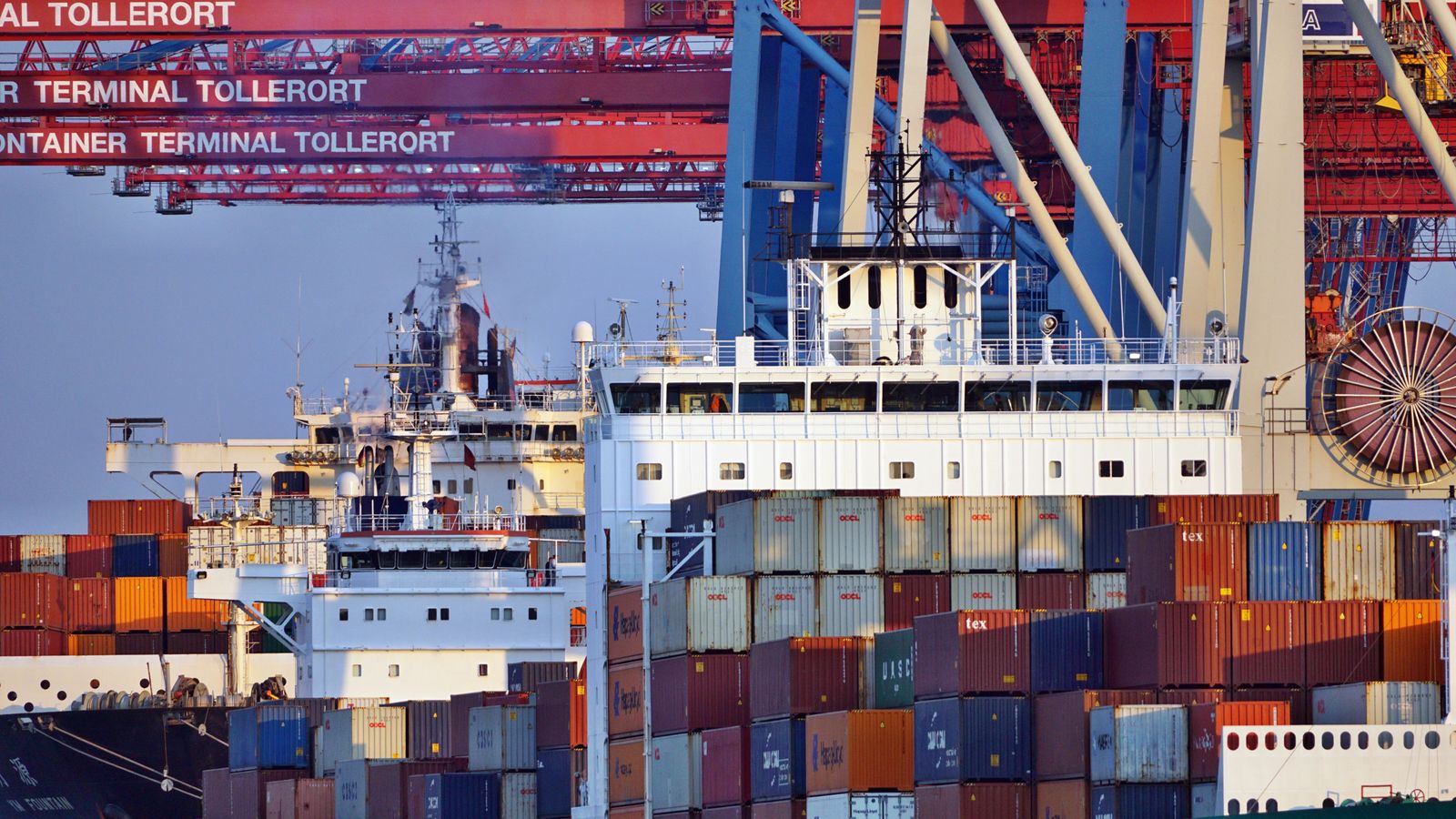
When you sell a good that physically leaves the territory of the European Union, the transaction is VAT-exempt under article 39 of the Belgian VAT Code, which transposes article 146 of directive 2006/112/EC. You therefore invoice without Belgian VAT, while keeping your right to deduct the VAT on purchases linked to that sale.
This exemption is not automatic: it depends on proving that the goods actually left the Union. The central document is the customs export declaration (the Single Administrative Document), which attests to the effective departure of the goods. Without proof, the administration can refuse the exemption and reclaim the VAT.
The evidence file for an export
Customs export declaration
The Single Administrative Document validated on exit from the Union, the keystone of the file.
Transport documents
Waybill, bill of lading or other proof of carriage to the third country.
Purchase order and contract
They establish the reality and the destination of the transaction.
Proof of payment
Settlement by the non-EU customer corroborates the whole.
Keep this file with the invoice: in Belgium, supporting documents are retained for seven years. The invoice itself refers explicitly to the legal basis of the exemption; a missing mention weakens the regime applied.
Services: the customer's status decides
For a service, the question is no longer the physical exit of a good but the place where the supply is deemed to take place. That place depends first on the customer's status. Supplied to a taxable person (a business), the service is in principle located where that customer is established: this is the general rule of article 21, § 2 of the Belgian VAT Code, which mirrors article 44 of directive 2006/112/EC. For a business customer established outside the Union, the service is therefore located outside Belgium and escapes Belgian VAT.
Supplied to a private individual, the service is in principle located where the supplier is established (article 21bis of the Belgian VAT Code), and Belgian VAT applies. But a series of intangible services supplied to a private individual outside the EU (consultancy, advertising, services of engineers and advisers, supply of staff, electronic services, among others) are located in the customer's country, and so outside the scope of Belgian VAT. The nature of the service and the customer's status govern the outcome.
| Good exported outside the EU | Service to a non-EU business | Service to a non-EU individual | |
|---|---|---|---|
| Belgian VAT on the invoice | Depends on the service | ||
| Main legal basis | Art. 39 VAT Code | Art. 21, § 2 VAT Code | Art. 21bis VAT Code |
| Evidence required | Exit from the EU at customs | Customer's taxable-person status | Nature of the service |
| Mention justifying the absence of VAT | If out of scope |
The mandatory mentions on a non-EU invoice
An invoice outside the EU is still an invoice: it carries all the usual Belgian mandatory mentions (identity of the parties, date, sequential number, description, taxable base). See Mandatory mentions on a Belgian invoice. Added to these is the mention that justifies the absence of VAT, without which nothing explains why the invoice carries no tax.
The mentions specific to an invoice without Belgian VAT
Reference to the legal basis
For example "VAT exempt - article 39 of the Belgian VAT Code - export" for a good, or a reference to article 21, § 2 for a service located at the customer's place.
Full identification of the customer
Name and address in the third country, and the business's local tax identifier where one exists.
Currency and equivalent value
If the invoice is denominated in a foreign currency, any VAT is expressed in euros.
If you invoice in another currency, the logic of showing VAT in euros applies here too: see The foreign-currency e-invoice.
Compliant invoices, in Belgium and abroad
YouInv handles the mentions, the currencies and the VAT regime of your invoices, including for your non-EU customers.
E-invoicing and Peppol: what actually applies
The Belgian structured e-invoicing obligation, which takes effect on 1 January 2026, targets transactions between taxable persons established in Belgium. A customer established outside the Union is neither a Belgian taxable person nor connected to the Peppol network: the invoice therefore does not travel over Peppol.
In practice, you send that customer an invoice in the form agreed with them, most often a PDF by email or a paper document. This exempts you from nothing: the invoice must remain accurate, complete and retained. It is simply the structured Peppol channel that does not apply to a non-EU counterparty. For the exact scope of the obligation, see Peppol Belgium: the B2B obligation from 1 January 2026.
Further reading
- Intra-Community VAT: invoicing between EU businesses: the case of customers in another member state.
- Mandatory mentions on a Belgian invoice: the common base of every invoice.
- The foreign-currency e-invoice: showing VAT in euros: invoicing in another currency.
Do you charge VAT to a customer outside the EU?
Rarely. Exporting goods to a non-EU country is VAT-exempt (art. 39 of the Belgian VAT Code), and a service supplied to a business customer outside the EU is located in that customer's country (art. 21, § 2 of the Belgian VAT Code), so it falls outside the scope of Belgian VAT. The invoice is then issued without Belgian VAT, but with a mention justifying that absence. For a private individual outside the EU, the rule depends on the type of service.
What mention goes on a non-EU export invoice?
For an export of goods, the invoice states the absence of VAT by referring to the legal basis, for example "VAT exempt - article 39 of the Belgian VAT Code - export". For a service located at the customer's place, you state that VAT is not due in Belgium by referring to article 21, § 2 of the Belgian VAT Code.
How do you prove an export outside the EU?
The proof rests mainly on the customs export declaration (the Single Administrative Document), completed by transport documents, the purchase order and proof of payment. Without evidence that the goods left the territory of the Union, the exemption can be refused and the VAT reclaimed.
Does an invoice to a non-EU customer go through Peppol?
No. The Belgian structured e-invoicing obligation from 1 January 2026 targets transactions between taxable persons established in Belgium. A customer established outside the Union is not connected to the Peppol network: the invoice is sent in the agreed form, most often a PDF or a paper document.
Do you need the non-EU customer's VAT number?
The intra-Community VAT number only exists within the Union. For a non-EU customer, you identify the counterparty by its name, its full address and, for a business, its local tax identifier where one exists. The customer's status as a taxable person must remain demonstrable, because it determines the regime applied to services.